A real-world EFB (Electronic Flight Bag) is usually an IPAD, Tablet or Laptop computer, containing flight documentation, charts, NOTAMs etc. Airline pilots refer to the EFB constantly because everything they need is in one place.
When simulating flight, we can have a similar idea, with the advantage that we can look at the stuff on a full-size monitor.
Add-ons like AVITAB enable you to consult such documentation from withing the X-Plane cockpit.
But when you want to plan and execute your flight, you don’t want to search the Internet for the relevant PDF files. By the time you have everything together, there’s no time left to fly.
My suggestion is to start assembling your own comprehensive Simulation EFB.
Create a dedicated folder called EFB Briefcase, which has sub-folders containing:
• Documentation of all the aircraft in your hangar. The official repository is here
• Documentation on any add-on software that you use
• Scenery manuals – for simplified airport diagrams, etc
• Charts—every time you come across a chart when browsing, save it in the briefcase for use “one day”. You could also purchase a Navigraph subscription.
• Reviews – The information contained in these reviews can save you an enormous amount of time. Make a point of storing a PDF review or a link to a review on a major site like x-planereviews.com or x-plained.com
• A PDF copy of the offline X-plane manual and a link to the online version.
This Briefcase folder, which usually has many sub-folders, eventually contains everything that we might want to look up when running or configuring X-Plane, or simply as a handy repository to keep all our learning and reference stuff together.
It can be located on the X-Plane computer or, better yet, on a secondary computer, laptop, or tablet.
Not to forget
Your EFB Briefcase should of course contain all your Flying-Low e-books. Browse the whole collection here

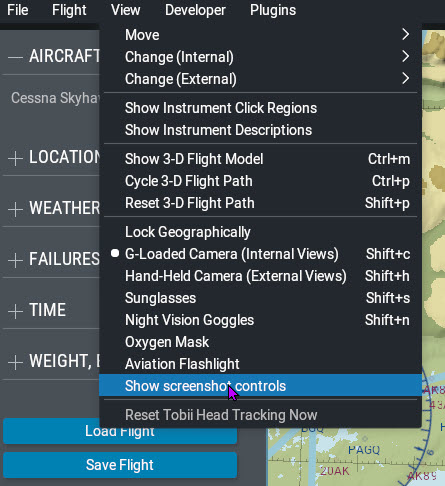
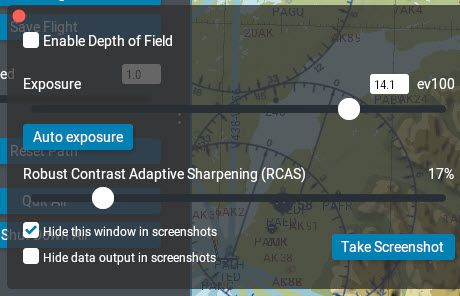
 creates a screenshot which is stored in the …X-plane 12\Output\screenshots folder.
 and then change the camera position. But by then you have probably already flown too far.
 to toggle the replay mode.